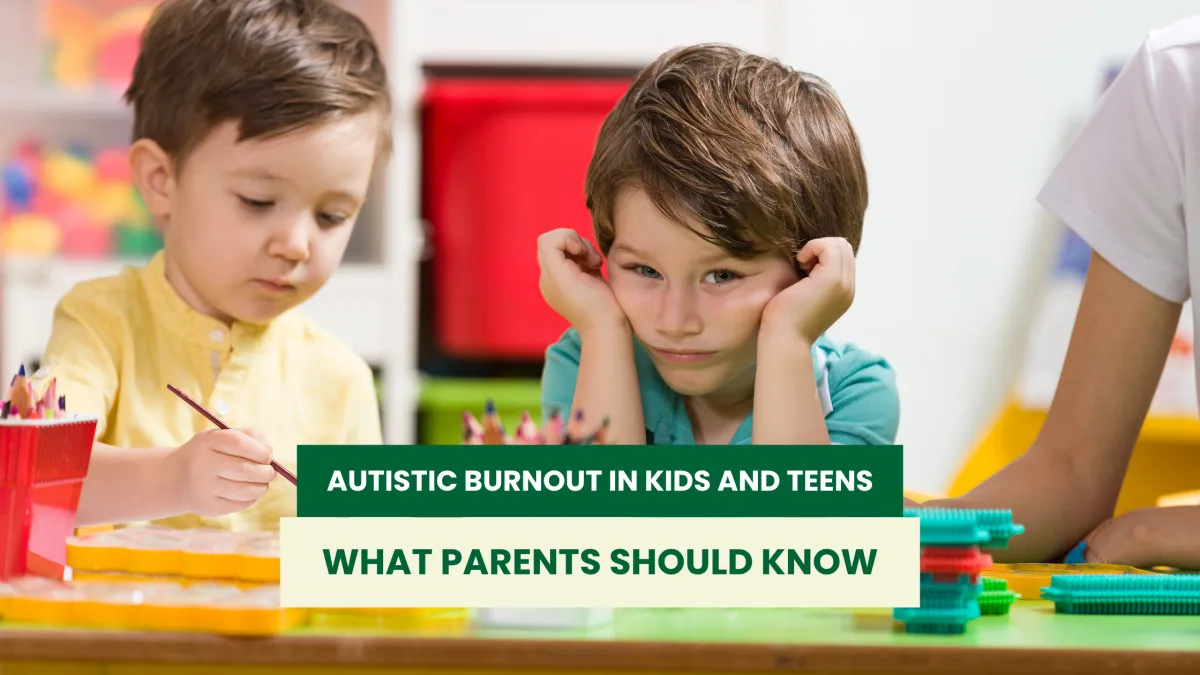
Autistic Burnout in Kids and Teens: What Parents Should Know
Autistic burnout can look like laziness, refusal, anxiety, or defiance from the outside.
A child suddenly refuses school. A teen stops replying to friends. Homework becomes impossible. Small requests lead to big reactions. Your child comes home from school and completely falls apart.
Many parents describe it this way:
“They seem fine at school, but when they get home, everything collapses.”
If that sounds familiar, your child may not be trying to make life difficult. They may be burned out.
At Forest Psychological Clinic in Portland, Oregon, we work with neurodivergent children, teens, and adults through autism evaluations, ADHD evaluations, and therapy. One pattern we see often is that a child’s nervous system can handle demands for a while, until the cost becomes too high.
Autistic burnout is not a moral issue.
It is a capacity issue.
What Is Autistic Burnout?
Autistic burnout happens when the demands on a person’s nervous system have been higher than their capacity for too long.
For kids and teens, those demands may include:
School
Homework
Social pressure
Sensory overload
Transitions
Masking
Executive functioning demands
Extracurricular activities
Family expectations
Lack of true recovery time
A helpful way to understand autistic burnout is to imagine your child’s nervous system like a phone battery.
Your child is running many apps at once: school, noise, lights, peer interactions, social rules, transitions, homework, emotional regulation, and trying to hold it together in front of other people.
If the battery is at 10% and never gets a real chance to recharge, the phone is not failing.
It is shutting down features to protect itself.
That is what burnout can look like in a child or teen.
Autistic Burnout Is Not Laziness
One of the most important things for parents to understand is that burnout is not laziness.
It is also not failure.
When a neurodivergent child is burned out, their brain and body may start conserving energy. That can look like withdrawal, refusal, irritability, shutdowns, or difficulty doing tasks they used to manage.
Parents may think:
They used to be able to do this.
Why is everything a battle now?
Are they avoiding responsibility?
Are they just being oppositional?
Why are they fine at school but not at home?
Those questions are understandable.
But if your child has been pushing through constant sensory overload, social strain, transitions, and pressure to act “fine,” the collapse at home may be the cost of holding it together all day.
Why Kids Seem Fine at School and Fall Apart at Home
Many neurodivergent children and teens use most of their energy getting through the school day.
They may be managing:
Bright lights
Loud classrooms
Cafeteria noise
Unstructured social time
Group work
Transitions between classes
Teacher expectations
Peer dynamics
Sensory discomfort
Masking their frustration or confusion
By the time they get home, their battery may be empty.
Home is often where children finally stop performing.
That can look like crying, irritability, silence, refusing homework, hiding in their room, arguing, or melting down over something small.
This does not mean home is the problem.
It often means home is the safe place where the child no longer has enough capacity to keep masking.
Signs of Autistic Burnout in Kids and Teens
Autistic burnout does not look the same for every child. Some children become quiet and withdrawn. Others become more irritable or reactive. Some seem anxious, numb, oppositional, or depressed.
Common signs of autistic burnout in kids and teens include:
Increased school refusal
More shutdowns or meltdowns
Withdrawal from friends or activities
More time alone in their room
Difficulty starting homework or chores
Decision paralysis
Increased irritability
Lower tolerance for small requests
Stronger sensory sensitivities
More difficulty with transitions
Evening collapse after school
Sleep disruption
Loss of interest in activities they used to enjoy
Increased anxiety or sadness
Reduced ability to manage daily tasks
The key pattern is a drop in capacity.
Your child may not be choosing to struggle. Their system may be overloaded.
Burnout Can Look Like Refusal
This is one of the hardest parts for parents.
Burnout often looks like refusal.
A child may say:
“I’m not going.”
“I can’t do it.”
“Leave me alone.”
“I don’t care.”
“No.”
From the outside, this can sound defiant.
But underneath, your child may be communicating something they do not yet have the words to say:
I do not have the capacity for this.
My brain is overloaded.
I cannot tolerate one more transition.
I have been masking all day.
I need the demand to go down before I can function.
This does not mean parents should remove every expectation. Kids still need structure, guidance, and support.
But when burnout is present, pushing harder can backfire.
The question becomes less, “How do I make my child comply?”
And more, “What is my child’s nervous system telling us?”
What Causes Autistic Burnout in Children and Teens?
Autistic burnout usually comes from a mismatch between demands and capacity.
Common contributors include:
Sensory overload
Noise, lights, clothing textures, smells, crowds, and busy environments can drain a child’s nervous system quickly.
Masking
Masking means hiding autistic traits or distress to meet expectations. A child may appear fine at school while using enormous energy to suppress discomfort, confusion, or frustration.
Too many transitions
Moving from home to school, class to class, activity to activity, or task to task can be exhausting for some neurodivergent kids.
Social pressure
Lunch, recess, group work, peer conflict, birthday parties, sports, and school events may require constant social processing.
Executive functioning demands
Starting tasks, organizing materials, tracking assignments, planning homework, and remembering instructions can drain capacity.
Lack of recovery time
If a child moves from school to homework to chores to activities to bedtime without real decompression, the nervous system may never fully recharge.
How Parents Can Help: Close Some Apps
If your child’s nervous system is like a phone battery, the first step is to close some apps.
Closing apps means reducing unnecessary load so your child is not constantly running in emergency mode.
Parents can start by reducing non-essential battles. If everything has become a fight, choose the battles that truly matter and let some smaller things wait while the system stabilizes.
You can also simplify routines. Use fewer verbal instructions, fewer choices, more predictable steps, and more visual supports.
Protect decompression time after school. If your child collapses when they get home, that is information. Before homework, chores, corrections, or questions, they may need a transition period where demands drop.
Reduce sensory load when possible. This may mean lower lights, less background noise, headphones, softer clothing, a quiet space, or avoiding errands after an already demanding school day.
Reduce social overload. If weekends are filled with activities, parties, sports, and family obligations, your child may not be getting enough recovery time.
Closing apps does not mean giving up.
It means lowering the load enough that your child can begin to function again.
Help Your Child Recharge for Real
Rest and recharge are not always the same thing.
A child may be lying down, scrolling, gaming, or sitting quietly, but their nervous system may not actually be recovering.
Real recharging looks different for every child.
For some kids, it may include:
Quiet time in a low-stimulation room
A walk outside
Drawing
Building with Legos
Listening to music
Swinging
Spending time with a pet
Taking a shower or bath
Parallel play near a parent
Engaging in a special interest
Sitting in silence without being asked questions
The question is not whether the activity looks productive.
The question is whether your child seems more regulated afterward.
A true recharge activity usually helps the body exhale. Your child may seem calmer, less reactive, or more available after it.
Do a Battery Audit
One practical step parents can try is a battery audit.
Ask yourself, or ask your child if they are able to participate:
What are the top two things draining your battery right now?
What is one thing that actually helps you recharge?
What is one demand we could lower this week?
For many children, school is the obvious drain. But the second drain may be less obvious.
It could be the bus ride, cafeteria, transitions, noise, group work, homework, a sibling conflict, a clothing texture, a sport that has become too demanding, or a friend group that requires heavy masking.
Keep the audit small.
The goal is not to redesign your entire family life overnight.
The goal is to identify one pressure point and reduce it.
Start With the After-School Window
For many neurodivergent kids and teens, the after-school window is where burnout shows up most clearly.
Instead of starting with questions, reminders, corrections, or homework demands, try a decompression buffer.
You might say:
“I’m glad you’re home. You don’t have to talk yet.”
“Let’s give your brain 30 minutes before we problem-solve.”
“You can have a snack, go to your room, or sit quietly. We’ll check in after you’ve had time.”
“We’ll talk about homework after your body has had a chance to reset.”
This does not mean expectations disappear.
It means you are respecting the transition from school mode to home mode.
For some children, this one change can reduce conflict significantly.
When to Seek Professional Support
Parents should consider professional support when burnout is severe, persistent, or interfering with daily life.
This may include:
Ongoing school refusal
Frequent meltdowns or shutdowns
Major sleep disruption
Withdrawal from friends or family
Loss of interest in activities
Significant anxiety or depression
Declining hygiene or self-care
Increased family conflict
Difficulty completing schoolwork
Concerns about safety or self-harm
A comprehensive evaluation can help clarify whether autism, ADHD, anxiety, depression, learning differences, sensory needs, or school mismatch are contributing.
Therapy can help children and teens build regulation skills, understand their nervous system, communicate needs, and recover from burnout more safely.
Parent support can also help families build a realistic plan without turning every day into a battle.
Autism and ADHD Support in Portland, Oregon
Forest Psychological Clinic provides autism evaluations, ADHD evaluations, and therapy for children, teens, and adults in the Portland, Oregon area.
We specialize in neurodiversity-affirming care that helps families understand what is happening and build a practical roadmap forward.
If your child seems burned out, overwhelmed, shut down, or unable to handle demands they used to manage, an evaluation or therapy may help clarify the next step.
You can learn more at:
FAQ: Autistic Burnout in Kids and Teens
What is autistic burnout in kids?
Autistic burnout in kids happens when the demands on the child’s nervous system exceed their capacity for too long. It may lead to shutdowns, meltdowns, withdrawal, school refusal, irritability, sensory sensitivity, or difficulty completing daily tasks.
Is autistic burnout the same as laziness?
No. Autistic burnout is not laziness. It is a capacity issue. A burned-out child may appear avoidant or unmotivated, but their nervous system may be overloaded and conserving energy.
Why does my child seem fine at school but fall apart at home?
Many neurodivergent kids mask or hold it together at school. By the time they get home, their battery may be depleted. Home may be the safe place where they finally stop performing and show how exhausted they are.
What does burnout look like in a neurodivergent teen?
Burnout in a neurodivergent teen may look like school refusal, sleeping more, irritability, social withdrawal, difficulty starting tasks, sensory overwhelm, loss of motivation, emotional shutdowns, or collapsing after school.
Can autistic burnout cause school refusal?
Yes. School refusal can happen when school demands exceed a child’s capacity. Sensory overload, social pressure, transitions, anxiety, executive functioning demands, and masking can all contribute.
How can parents help with autistic burnout?
Parents can help by reducing unnecessary demands, protecting decompression time, lowering sensory input, simplifying routines, supporting real recharge activities, and identifying what is draining the child’s battery.
Should I push my child through burnout?
Pushing harder can backfire when a child is truly burned out. Support should focus on lowering unnecessary load, rebuilding capacity, and gradually reintroducing demands in a realistic way.
How do I know if my child needs an autism or ADHD evaluation?
An evaluation may help if your child has persistent school refusal, meltdowns, shutdowns, sensory sensitivities, social struggles, executive functioning difficulties, or unexplained drops in functioning across home, school, or social settings.
Can therapy help autistic burnout?
Yes. Therapy can help children and teens understand their nervous system, build regulation skills, communicate needs, reduce shame, and develop realistic coping strategies. Parent support can also help families adjust expectations and routines.
What is a battery audit?
A battery audit is a simple exercise where you identify what drains your child’s energy, what helps them recharge, and one demand that can be reduced. It helps parents understand the relationship between capacity and daily demands.
Final Thoughts
If your neurodivergent child is burned out, they are not failing at being a kid.
And you are not failing as a parent.
Burnout is information. It tells us that the current demand load is too high for the current capacity.
Once you understand that, the goal becomes clearer: reduce unnecessary demands, protect real recovery, and slowly build a life that fits your child’s nervous system more honestly.
Start with one app you can close.
Start with one recharge activity that actually helps.
Start with one moment where you see the behavior not as defiance, but as communication.
That shift can change the tone of the whole house.

