

























Northeast Portland
1818 NE Irving Street Portland, OR 97232
(971) 331-1366
Oswego Pointe
Suite 220 Lake Oswego, OR 97034
(971) 331-1366
Therapy for Children and Teens, In Portland Or
At Forest Psychological Clinic, we specialize in providing comprehensive, evidence-based therapy for children, adolescents, and teens in Portland, OR.
Therapy for Children Portland Or
At Forest Psychological Clinic, we specialize in providing comprehensive,
evidence-based therapy for children, adolescents, and teens in Portland, OR.
Child and Teen Mental Health Therapy
If you are looking for therapy for children in Portland, Forest Psychological Clinic offers evidence-based, neurodiversity affirming therapy for children, teens, and families. Our team specializes in supporting children with autism, ADHD, anxiety, emotional regulation difficulties, and developmental differences, and we work closely with parents, schools, IEP teams, speech pathologists, occupational therapists, and other providers when coordination would help.
Because our clinic also provides comprehensive evaluations, we can help families move from uncertainty to clarity and from diagnosis to targeted, effective treatment.
Child Therapy (Ages 3-12)
Our child therapy services address a wide range of concerns, including:
Anxiety & Fears (including separation anxiety, phobias, and social worries - we can help build self esteem)
Behavioral Challenges (aggression, defiance, emotional outbursts)
Attention-Deficit/Hyperactivity Disorder (ADHD) Support
Social Skills Development for Autism Spectrum Disorder (ASD)
Coping with Divorce, Family Transitions & Life Changes
Grief & Loss Counseling
Sleep & Nighttime Anxiety Issues
We use evidence-based approaches such as Cognitive Behavioral Therapy (CBT), play therapy, and mindfulness techniques to help children understand their emotions, manage stress, and communicate more effectively. A child therapist is a great way for kids to learn more about overcoming everyday challenges and experience evidence based interventions when needed.
INFORMATION:
300 Oswego Pointe, Suite 220 Lake Oswego, OR 97034

Our Approach to Child Therapy
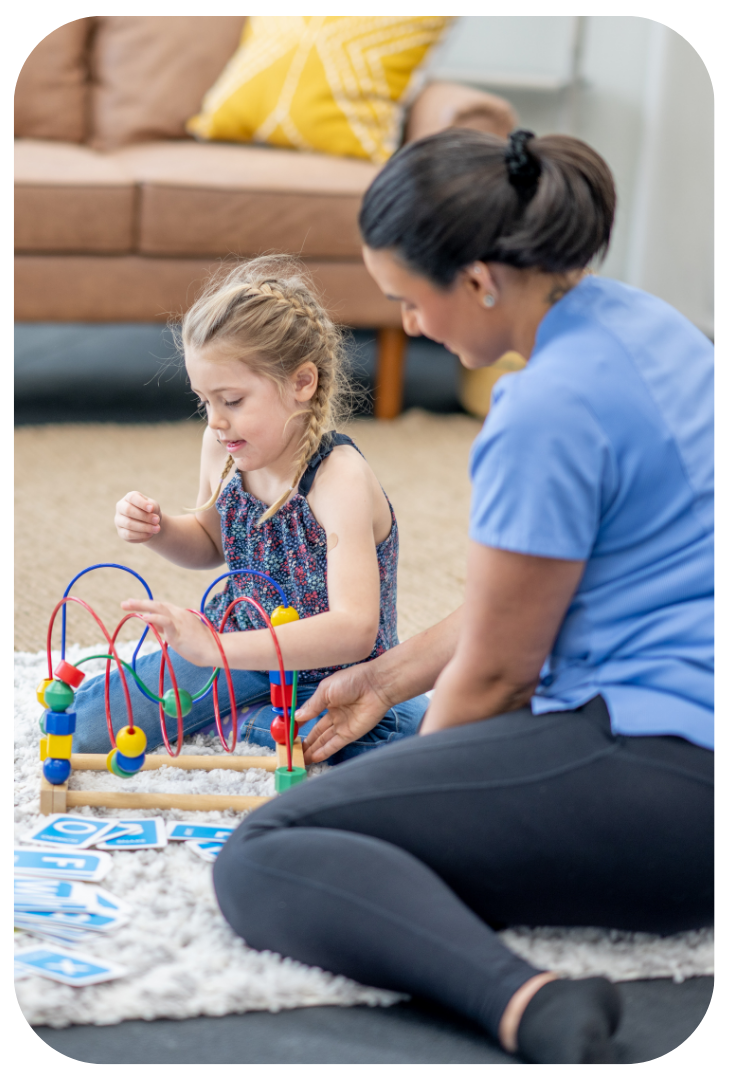
Children often express their thoughts and emotions through play and creativity rather than words. That’s why we use:
Play & Art Therapy – Helps children express themselves in a safe, nonverbal way
Interactive Behavioral Strategies – Encourages positive habits and emotional regulation
Mindfulness & Relaxation Techniques – Builds resilience and reduces anxiety
Parental Guidance & Support – Equips caregivers with tools to reinforce progress at home
Our goal is to provide compassionate care in a warm engaging space where children feel comfortable exploring their emotions and learning skills that will benefit them for life.
Parental Support & Family Involvement
We believe therapy is most effective when parents and caregivers are part of the journey. That’s why we provide:
Parent coaching and guidance to reinforce healthy coping skills at home
Family therapy sessions to improve communication and connection
Behavioral strategies to help navigate challenges more effectively
Your child’s emotional health matters, and we’re here to support both them and your family every step of the way.
Convenient In-Person & Telehealth Options
We offer both in-person therapy in Portland, OR, and secure online therapy options to make high-quality mental health support as accessible as possible.
If your child is struggling with anxiety, social challenges, or big emotions, we’re here to help. Schedule an appointment today and take the first step toward a brighter future.
(971) 331-1366
300 Oswego Pointe Dr, Suite 220 Lake Oswego,
Oregon 97034, United States
HELP CENTER
Questions and Answers
Find answers to the most commonly asked questions about our services.
What types of therapy do you use?
We use evidence-based approaches tailored to the child’s age, needs, and goals. These may include Cognitive Behavioral Therapy (CBT), DBT-informed coping and emotional regulation skills, executive functioning support, ACT-based strategies, and play-based work that still draws from evidence-based principles.
Our goal is not to force every child into the same model. It is to understand what is driving the difficulty and then use therapies that fit the individual and family.
Mental health is not just for adults, and many children benefit from working with children therapists who use evidence-based practices, education, and practical guidance to help childhood development, emotional growth, and confidence. Helping kids understand feelings, build confidence and self-esteem, learn coping strategies, and develop problem-solving skills can be very beneficial for the whole family.
We also provide austism therapy and ADHD therapy to treat clients. Supporting neurodivergent children is one of the core strengths of our clinic. We work with many kids and teens with autism and ADHD, along with related concerns such as anxiety, emotional regulation difficulties, impulsivity, and executive functioning challenges.
Our approach is strengths-based and neurodiversity-affirming. We focus on helping children better understand themselves, reduce distress, build practical skills, and function more successfully in everyday life.
What ages do you work with?
Children’s therapy typically supports ages 3–12, especially when they face behavioral challenges, grief and loss, anxiety, or sleep-related concerns. Many children and adolescents benefit from therapy when they are struggling emotionally, socially, or at home and school. Seeking support early can help children develop skills, strengthen emotional regulation, and improve healthy development through evidence based interventions and in person therapy or telehealth, depending on what feels most comfortable for the family.
We work with young children, school-age children, teens, and young adults. For children ages 2 to 5, treatment often includes a strong parent coaching component, since caregivers are usually the primary agents of change at that stage. We also work extensively with children ages 6 to 12, as well as teenagers and young adults. Across age groups, we often see the best outcomes when parents or caregivers are involved in a meaningful and helpful way.
What is the best therapy for childhood issues?
The best therapy depends on the child’s needs, but common approaches include play therapy, family therapy, behavioral support, and evidence based approaches. Some children benefit from support for social skills development for autism spectrum disorder (ASD), attention-deficit/hyperactivity disorder (ADHD), anxiety, or big emotional reactions as well as family therapy sessions, which are common.
The goal is to provide therapy services that help kids develop skills, strengthen self confidence, and give family members practical tools to help guide progress at home, while also empowering kids to better understand their emotions and navigate challenges with greater confidence.
How do I know if my child may need therapy?
Many families reach out when their child is struggling with anxiety, emotional outbursts, impulsivity, attention difficulties, social challenges, or school-related stress. Sometimes the concern is obvious. Other times, parents simply have a sense that their kid is having a harder time than expected.
Therapy can help when a child is having difficulty managing emotions, coping with daily demands, building relationships, or functioning well at home or school. In some cases, those struggles may also be connected to autism, ADHD, or developmental delays.
How to get a child to go to therapy?
Introduce therapy in a positive, low-pressure way by explaining that it is a safe place to talk, play, and learn new coping strategies. It can help to describe therapy as support for feelings, worries, or challenges rather than something being “wrong.” Parents can help by involving children in the process, highlighting approachable options like play therapy, and reassuring them that therapy is about empowering kids and helping the whole family move forward together. In person therapy and secure online sessions may both help children feel more comfortable.
When should parents consider therapy for their child?
Parents may want to consider therapy when a child is showing ongoing anxiety, behavioral changes, emotional outbursts, family stress, trouble with transitions, or difficulty coping with daily life. Early intervention can be an integral part of supporting a child’s mental health and emotional growth. Therapy can help children build resilience, improve self esteem, and feel more understood.
Do you collaborate with schools and other providers?
Yes. When it would benefit the child, we collaborate with school counselors, IEP teams, psychiatrists, speech pathologists, occupational therapists, and other providers involved in care.
This kind of coordination can be especially helpful when a child’s challenges show up across multiple settings. When home, school, and treatment providers are working from the same understanding, progress is often more consistent.
Do you involve parents in therapy?
Yes. Parent involvement is an important part of effective child therapy, especially for younger children. We help parents better understand what may be driving their child’s behavior, learn practical support strategies, and build stronger communication and connection at home. Rather than placing all of the responsibility on the child, we work to support the larger system around the child.
Family therapy can be the best path and very helpful when kids face challenges that are affecting communication, routines, or relationships at home. Parents participating can improve understanding, strengthen connection, and create more consistent encouragment outside of sessions. It can also help them feel more secure while giving caregivers tools to respond to behaviors and emotions in a caring, encouraging way.
How does therapy support a child’s daily life?
Therapy can help children in many areas of daily life, including emotional regulation, relationships, routines, and school-related stress. It can also help children learn self care habits, build confidence, and develop healthy ways to express themselves. Over time, therapy can guide positive changes that improve both functioning, social skills and overall mental health, self care and well being.
What makes your therapy for children in Portland different?
At Forest Psychological Clinic, our approach is neurodiversity-affirming, specialized, collaborative and compassionate care. Our clinicians have experience supporting children and teens with autism, ADHD, anxiety, emotional regulation challenges, and related developmental differences.
We also look beyond the therapy room. We work closely with parents and, when appropriate, coordinate with schools, IEP teams, school counselors, psychiatrists, speech pathologists, and occupational therapists. In addition, our clinic offers both therapy and comprehensive evaluations to treat patients, which helps families get clearer answers and a more targeted treatment plan.
What if my kid does not connect with the therapist?
Therapist fit matters, especially with kids and teens. We take care in matching each child with a clinician who fits their needs, age, and personality, and our team has strong experience building rapport with neurodivergent children and adolescents. At the same time, not every match is perfect. If it does not feel like the right fit, we are happy to talk through other options, including another therapist on our team or an outside referral when needed.
What should parents look for in a therapist?
Parents often look for someone who understands children development, uses evidence based approaches, and enjoys working with kids and families. It is also important to find a therapist who can build trust, communicate clearly, and tailor treatment to a child’s age, personality, and unique needs. A strong therapist helps children express feelings in healthy ways, supports emotional growth, and gives parents practical tools they can use at home. Families may also want to look for someone who creates a warm, encouraging environment and works collaboratively with the whole family when needed.
If you are looking for autism therapy, ADHD and behavioral therapy, anxiety therapy, Forest Psychological Clinic is here to help you or someone you love take the next step.
What are fine motor skills, and why do they matter?
Fine motor skills are the small hand and finger movements children use for tasks like writing, drawing, using utensils, buttoning clothing, and managing school materials. When children struggle with fine motor development, it can affect confidence, frustration tolerance, independence, and school performance.
While occupational therapy is often the main service used to address fine motor development directly, therapy can help with the emotional side of the struggle, including avoidance, anxiety, shame, perfectionism, or frustration around difficult tasks.
We do not provide occupational therapy directly. However, we often collaborate with occupational therapists when a child needs guidance with sensory processing, daily living skills, regulation, or fine motor skills.
That collaboration can be valuable because some children benefit from both emotional and behavioral guidance in therapy and more direct skill-based intervention through occupational therapy.
What is augmentative and alternative communication?
Augmentative and alternative communication (AAC) refers to tools and systems that help communication for children who have limited spoken language or who communicate more effectively with visual or device-based supports. Augmentative and alternative communication can include picture systems, speech-generating devices, communication apps, and visual supports.
For children who use AAC, therapy should help communication in the form that works best for them. When children can communicate more effectively, they often experience less frustration and more success socially and emotionally.
Do you accept insurance for therapy?
We accept Kaiser, Providence, Regence, PacificSource, ComPsych, and private pay for therapy services, and we can also provide superbills when appropriate. We expect to add Moda as well.
If you plan to use insurance, our team can help you understand the next steps and discuss current coverage options.
How do I get started with a child therapist in Portland?
We begin with a consultation to better understand your kid’s needs, concerns, and goals. From there, we help determine the best next step, whether that is therapy, an evaluation, occupational therapy, or both.
Our focus is on treating each child as a whole person, while while empowering kids and helping parents access the right resources, programs, and compassionate care. Therapy can also be fun, engaging, and practical, giving children space to develop skills they can use in their daily lives.
If you are looking for a child therapist in Portland, therapy for kids in Portland, or support for autism, ADHD, anxiety, or emotional regulation challenges, we are here to help patients and caregivers find a clear path forward.

We provide a safe space where you can find peace within yourself. Our expert therapists guide you through overcoming mental challenges with personalized care.
Lake Oswego
300 Oswego Pointe, Suite 220 Lake Oswego, OR 97034
Northeast Portland
1818 NE Irving Street Portland, OR 97232
Copyright © 2026 Forest Psychological Clinic, LLC - All Rights Reserved.